ServicesGutters
Gutters in Warr Acres That Keep Storm Water Moving
When a hard rain hits, your gutters decide where hundreds of gallons of roof water go. We repair, rehang and replace gutters so that water leaves your roof, clears the fascia and lands well away from your foundation, then we show you what we did.
What Our Gutter Work Covers
Gutters are part of the roof system, not an add-on. They catch water at the drip edge and carry it to downspouts, and when they sag, clog or pull loose, that water backs up under shingles, soaks the fascia boards and pools beside your home. We look at the whole path, from the roof edge down to where the water exits.
Sometimes a few hangers and resealed corners solve the problem. Other times the run is too small, pitched wrong or dented past saving after hail. We tell you which it is and why, so you can decide calmly instead of under pressure.
Central Oklahoma storms can dump a lot of rain in a short burst, so we size gutters and downspouts for those downpours rather than a light shower.
What's Included When We Work on Your Gutters
- One-piece runs formed on site
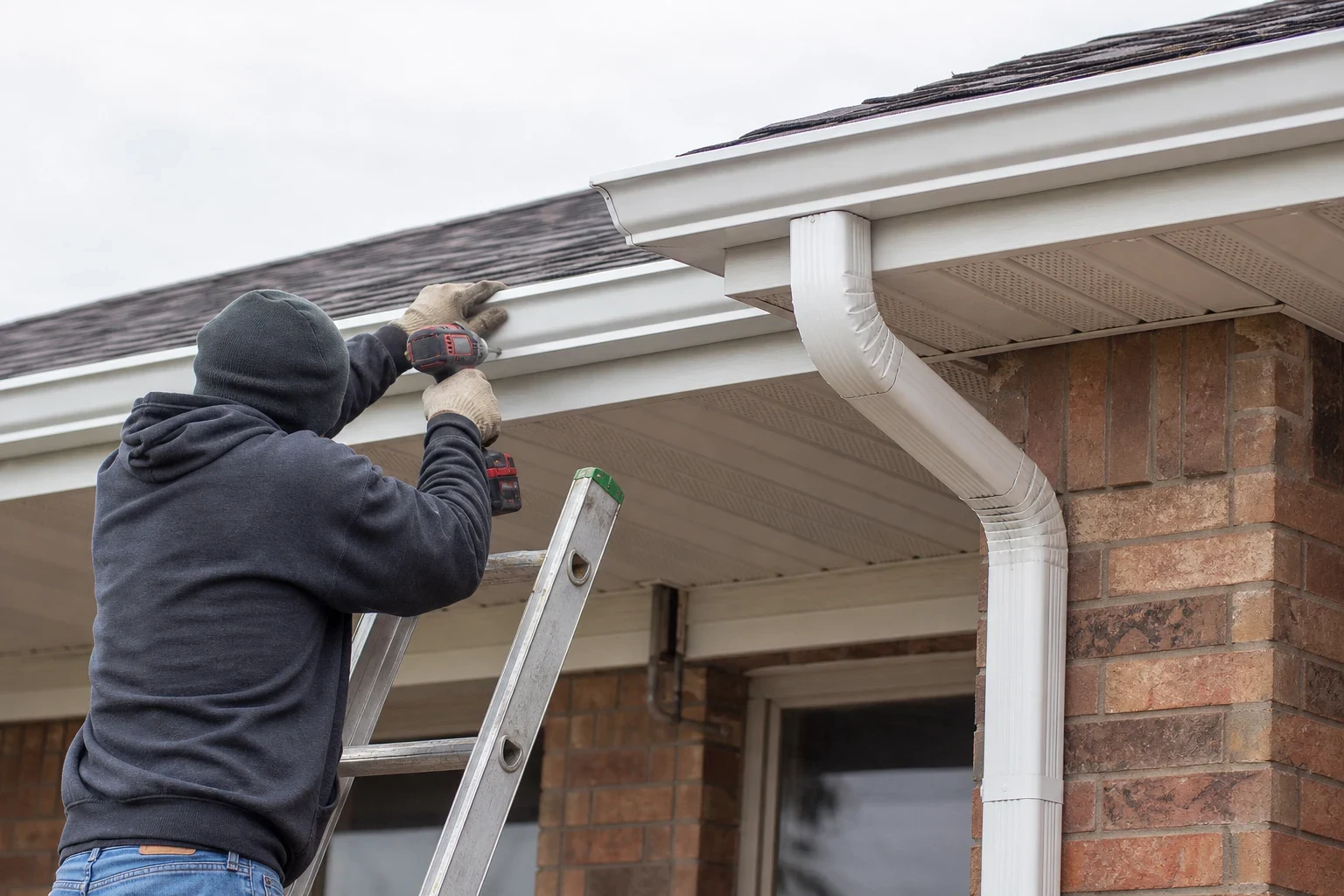
- We form aluminum gutters on site in continuous lengths cut to each run of your home. With joints only at the corners and outlets, there are far fewer places for a leak to start.
- Pitch and hanger correction
- Gutters need a slight, steady slope toward each downspout. We reset low spots and replace failed spikes with hidden hangers spaced closely enough to carry a load of wet leaves.
- Downspout placement and extensions
- We add or move downspouts where long runs overflow, and extend outlets so water discharges away from the foundation instead of beside it.
- Fascia and drip edge check
- The boards behind your gutters carry all that weight. If we find soft or rotted fascia, we photograph it and show you, since new gutters screwed into bad wood won't stay put for long.
- Leak and joint repair
- Dripping corners, end caps and outlets get cleaned and resealed when the metal underneath is still sound.
- Cleanup before we leave
- Old gutters, cut-offs and screws are hauled away, and we walk the beds and driveway so nothing sharp is left behind.
When Your Gutters Are Telling You Something
Overflow during a downpour
Water pouring over the outer lip in a storm points to a clog, a gutter that's too small or a slope running the wrong way. Step outside during the next hard rain and look along the roofline.
Sagging or pulling away
A gutter drooping between hangers is holding standing water. The weight gets worse with every storm and can tear the fascia.
Dents after hail
Hail often leaves dents in gutters and downspouts before damage is easy to spot on the roof. Dented gutters are also useful evidence if you're deciding whether to look into an insurance claim.
Peeling paint or stains on the fascia
Streaks and blistered paint behind the gutter mean water is getting where it shouldn't, often from a gap at the drip edge.
Erosion or puddles near the foundation
Washed-out mulch, bare soil or standing water under a downspout tells us the discharge needs to move farther from your home.
What Moves the Price of Gutter Work
Gutter pricing comes down to how much is being installed and what it's attached to. We quote after seeing your home, and we explain each part of the number so nothing surprises you later. Here's what makes the biggest difference.
Linear footage and corners
Longer runs and more inside or outside corners mean more material and more labor.
Gutter size and downspouts
Larger gutters and extra or oversized downspouts handle heavy rain better and cost a bit more up front.
Fascia condition
Rotted boards have to be replaced before anything gets hung. We show you photos so you can see why.
Height and access
A second-story roofline, a steep pitch or a narrow gap between houses means more ladder setup and slower work than an open, single-level ranch.
Add-ons like guards
Gutter guards and longer extensions add cost but can cut down on clogs under heavy tree cover.
How a Gutter Job Runs
- 1
A look at the full drainage path
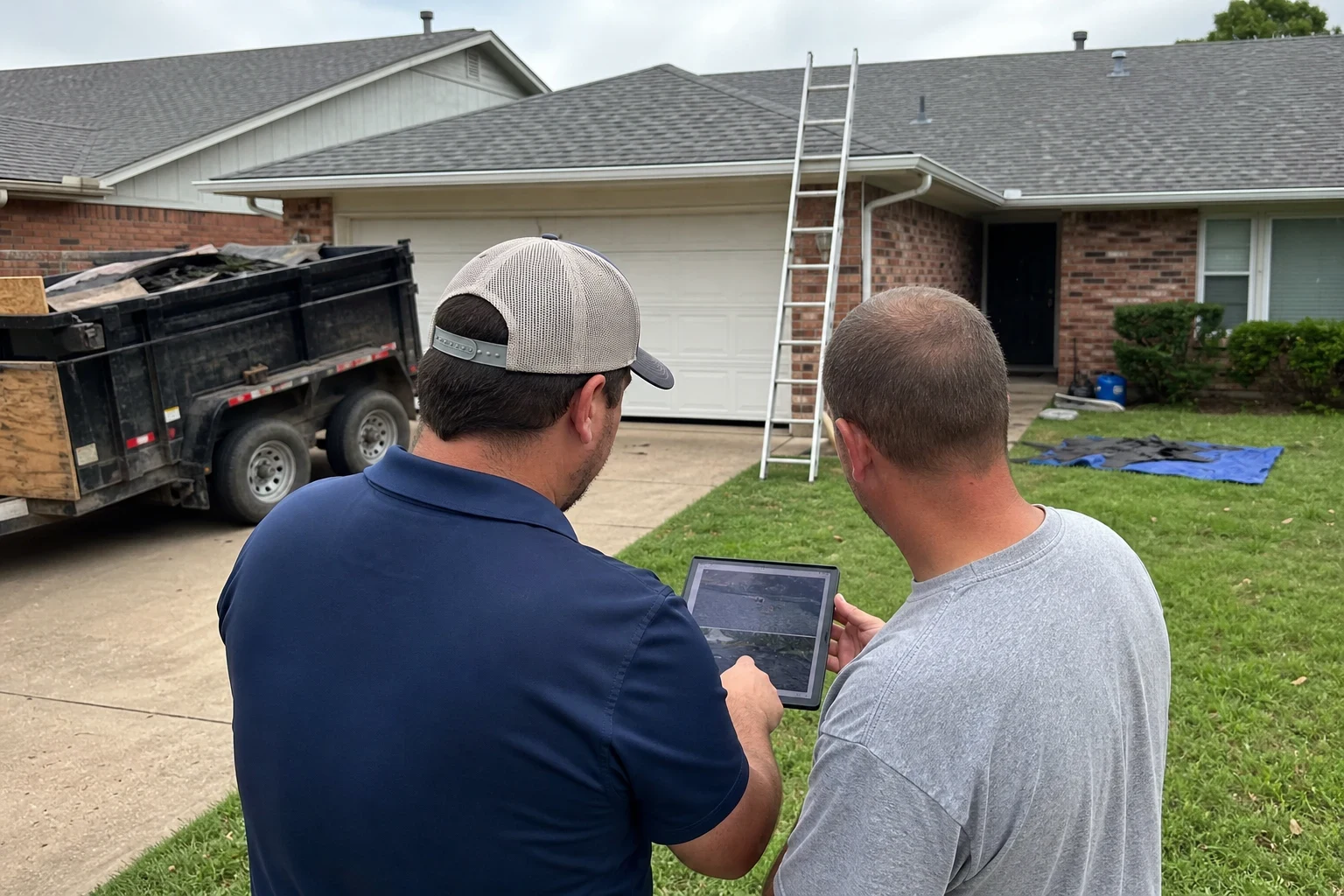
We walk the roofline, check pitch and hangers, look behind the gutters at the fascia and note where each downspout empties. You get photos of what we found.
- 2
A clear recommendation by phone
We explain whether repair will hold or replacement makes more sense, list what's included and answer your questions. If hail is involved, we explain how gutter damage fits into a claim, though the adjuster makes the coverage call.
- 3
Install or repair day
Most gutter jobs on a typical home take a single day. We protect plants under the work area, remove old sections, repair the drip edge where needed and hang the new runs.
- 4
Water test and walk-through
We run water through the system to confirm it flows to every downspout, then walk the yard with you and clean up before we leave.
Common Gutter Questions
Should I repair my current gutters or replace them?
If the metal is still in good shape and the problem is a few loose hangers or leaky seams, repairing usually makes sense. If the runs are dented, rusted through or undersized for the roof draining into them, new gutters are a better investment. We give you a straight answer and the photos to back it up.
Could hail have damaged my gutters when the roof seems okay?
It could. Gutters and downspouts dent easily, so hail damage tends to show there first. Those dents can also suggest the shingles were struck, so we check both. If storm damage seems likely, our storm damage repair page explains the next steps.
Does insurance pay for gutter damage?
That depends on your policy and what caused the damage. Hail and wind damage often falls under a roof claim, while clogs and normal wear typically don't. We can photograph what we find and walk you through the process, but coverage is your adjuster's call.
Are gutter guards worth it for my home?
Many homes don't need them. If big trees hang near your roof and you're cleaning gutters several times a year, guards can make a difference. With an open yard, a properly sized gutter with the right slope is often enough.
Do new gutters go up before or after a roof replacement?
When a new roof is on the way, it usually works best to do the gutters alongside it or just after. That way the drip edge and fascia are dealt with once, and new gutters never have to come down and go back up.
Want Gutters That Actually Drain?
Let us know what you saw during the last hard rain, and we'll schedule a visit to check your gutters and go over your choices.