ServicesRoof Inspections
Roof Inspections in Warr Acres
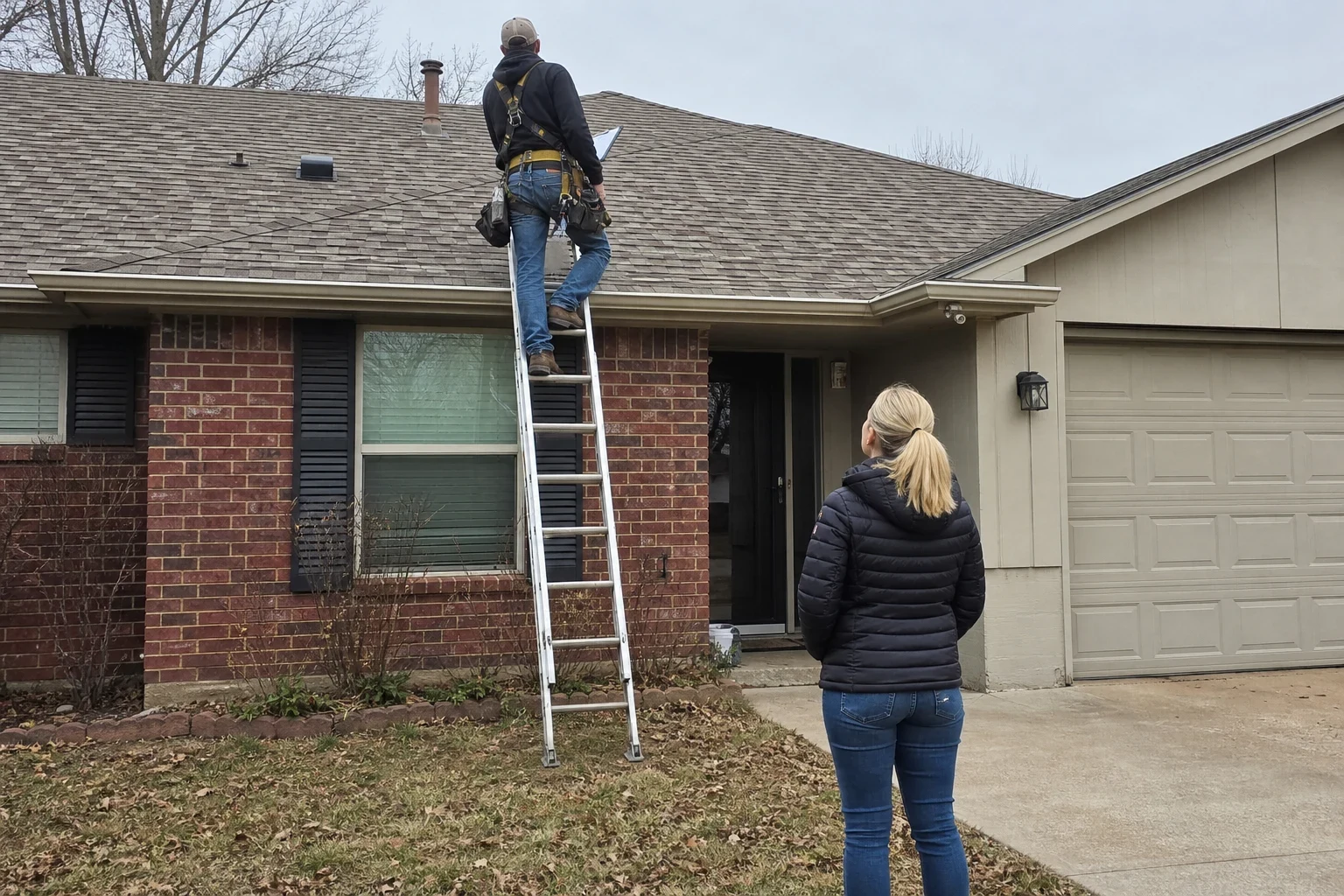
After a hailstorm, a windy night or a new water spot on the ceiling, you want to know what actually happened up there. We walk your roof, check the attic and show you photos of what we found, so your next step is clear and sensible.
A clear picture of your roof before you decide anything
A roof inspection is the calm first step after something feels off. Maybe a storm rolled through, a neighbor is getting a new roof, or you are buying or selling a house. We look at the whole roof system, not just the spot you are worried about, and tell you what we see in plain words.
Plenty of inspections end with good news: a few loose shingles, a vent boot to watch, nothing urgent. When there is real damage, you will know where it is, how serious it is and whether roof repair, storm damage repair or a full roof replacement makes the most sense.
Spring hail and strong straight-line winds are part of life here, and the damage they leave is not always visible from the driveway. That is why we get on the roof and look closely before anyone talks about cost.
What we check on your roof
Shingle surface and hail marks
We look for bruised or cracked shingles, lost granules and soft spots where hail struck. Granules collecting at the downspouts are a clue we always follow up on.
Wind lift and missing pieces
We check for shingles that have lifted, creased or torn loose, especially along ridges, rakes and edges. A creased shingle can let water under it long before it falls off.
Flashing and pipe collars
Leaks usually begin where the roof meets something else, like a chimney, a sidewall, a skylight or a plumbing pipe. We look over the metal flashing, the sealant and the rubber collars around each pipe for cracks, gaps and rust.
Decking and attic
From inside the attic we look for daylight, water stains, damp insulation and signs of poor airflow. Soft or sagging decking tells us the problem has been there a while.
Gutters and drainage
We check that gutters are attached, sloped and clear, and that downspouts move water away from your home. Dents in gutters and downspouts also help confirm hail size.
Labeled pictures to keep
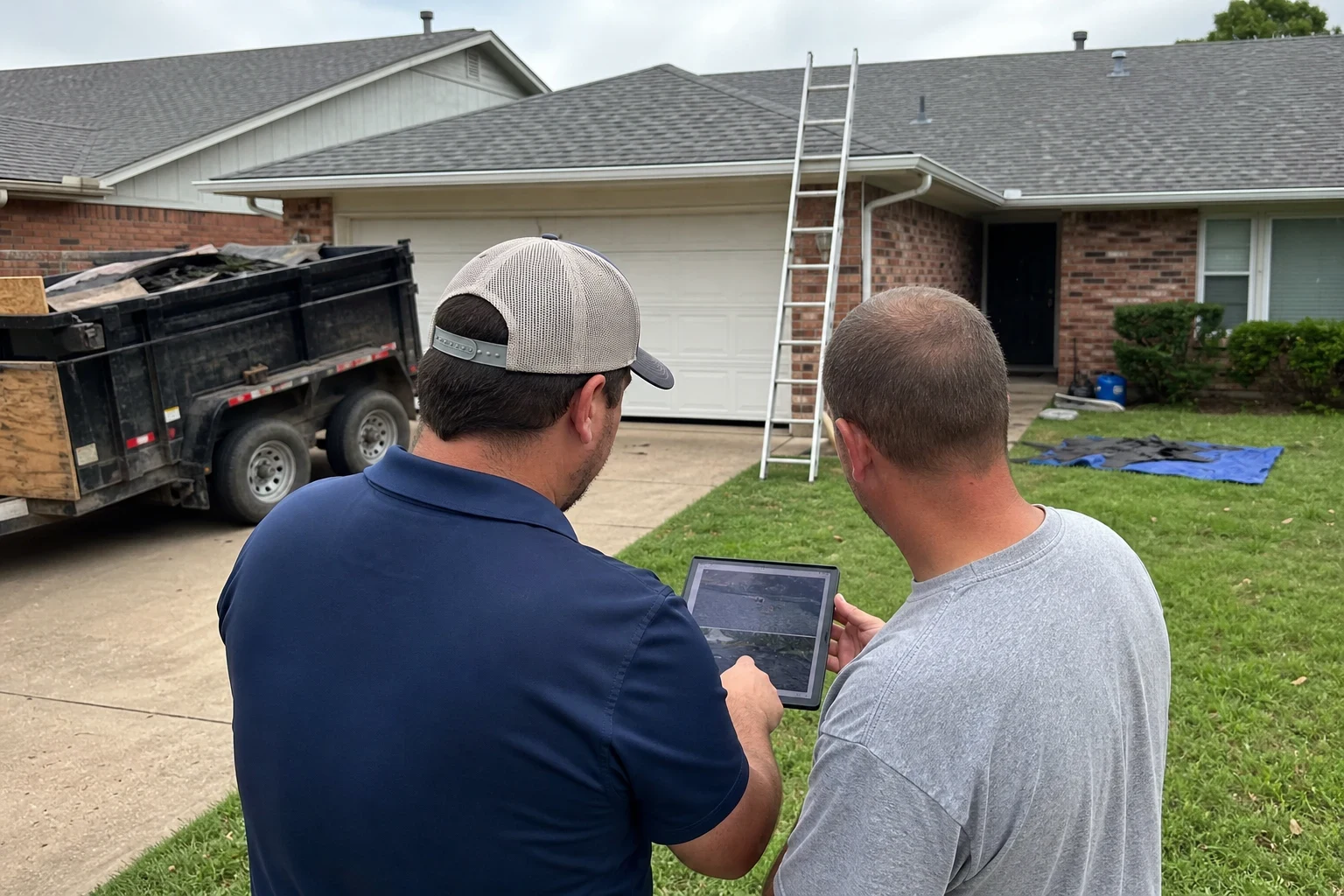
Each problem we spot is photographed and labeled, so you can see exactly where it sits on the roof. We add a short note listing what needs attention now and what can safely wait.
When a roof check makes sense
- Hail or high wind came through
- Strong gusts and hailstones can bruise shingles without dropping anything on the lawn. Checking soon afterward gives you a dated record while the marks are still fresh.
- Water stains or a musty attic
- Brown rings on a ceiling or a damp smell upstairs usually point to a slow leak that started weeks ago. Tracing it now means a modest fix instead of replacing soft, rotted decking later.
- Shingle pieces in the yard
- Tabs, granules or bits of flashing on the lawn mean something up top has moved. Even one missing shingle leaves the underlayment exposed to sun and rain.
- Your roof is getting older
- Shingles wear slowly, and the early signs are easy to miss from the ground. If your roof is past fifteen years, a check every year or two helps you plan ahead rather than react to a leak.
- Buying, selling or refinancing
- A roof inspection helps you know what you are buying or what a buyer will find. It is far easier to deal with a known issue than a surprise during closing.
What happens during your inspection
- 1
A short call to start
Let us know what you have seen, such as a leak, missing shingles or the date a storm hit. We book a time that suits you and explain how the visit will go.
- 2
Yard first, then the roof
We start on the ground, looking at gutters, downspouts and siding for signs of the storm. Then we climb up and cover each slope, taking photos of anything that stands out.
- 3
A look from the attic
When we can reach the attic, we look for stains, daylight showing through and wet insulation. That often tells us whether a mark on the roof is truly leaking.
- 4
Going over what we found
We review the photos with you side by side. You learn what is damaged, what is ordinary wear and what we would tackle first, and nobody asks you to commit that day.
- 5
Planning what comes next
When the damage appears to come from a storm, we describe how a homeowner's claim tends to go and what the adjuster will look for. Your insurance company always makes the claim decision, but you will be ready for that conversation.
What affects the cost of an inspection
An inspection is a small job compared to repair work, and we will tell you the cost by phone before we come out. A few things change how long it takes and how much detail you need.
- Roof size and pitch
- More square footage and a steeper slope mean more time spent moving carefully and photographing each face of the roof.
- Attic access
- An easy hatch takes minutes. A tight crawl space or no access at all changes how we check from inside.
- Purpose of the report
- A quick check for your own reassurance is simpler than a detailed photo record for a real estate sale or an insurance claim.
- Number of problem areas
- Several leaks, skylights or chimneys mean more flashing to inspect and more findings to document.
Roof inspection questions
- How soon after a storm should I have my roof inspected?
- Within a few days to a couple of weeks is sensible. Damage is easier to document while it is fresh, and most insurance policies have deadlines for reporting storm damage. If water is coming in, mention that when you call so we can talk through how to protect your home until we get there.
- Do I need to be home during the inspection?
- It helps, mainly so we can get into the attic and go over the photos with you afterward. If you cannot be there, we can inspect the outside and talk through the findings with you by phone.
- Will you tell me I need a new roof?
- Only if that is what we honestly see. Many inspections end with a small repair or simply a note to keep an eye on something. When a roof does need replacing, we show you why with photos so you can judge for yourself.
- Will you work with my insurance company on a storm claim?
- We photograph the damage clearly and walk you through how a typical claim moves from filing to the adjuster's visit. Coverage decisions belong to your insurer and their adjuster, not to us. If you would like, we can be on site when the adjuster comes so the damage we found gets pointed out.
- How long will you be at my house?
- Plan on roughly an hour on site for a typical house. A big or steep roof, or a careful record for a claim, can stretch that out. Reviewing the photos together at the end adds a few more minutes.
- Do you inspect gutters too?
- Yes. Gutters and downspouts are part of every roof inspection because poor drainage causes its own leaks and fascia rot. If they need work, we can talk with you about our gutters service.
Not sure what that last storm did to your roof?
Give us a ring with whatever caught your eye, from a ceiling stain to shingle bits in the flower bed, and we will find a time to check the whole roof. You will get photos, a plain explanation and an honest next step.